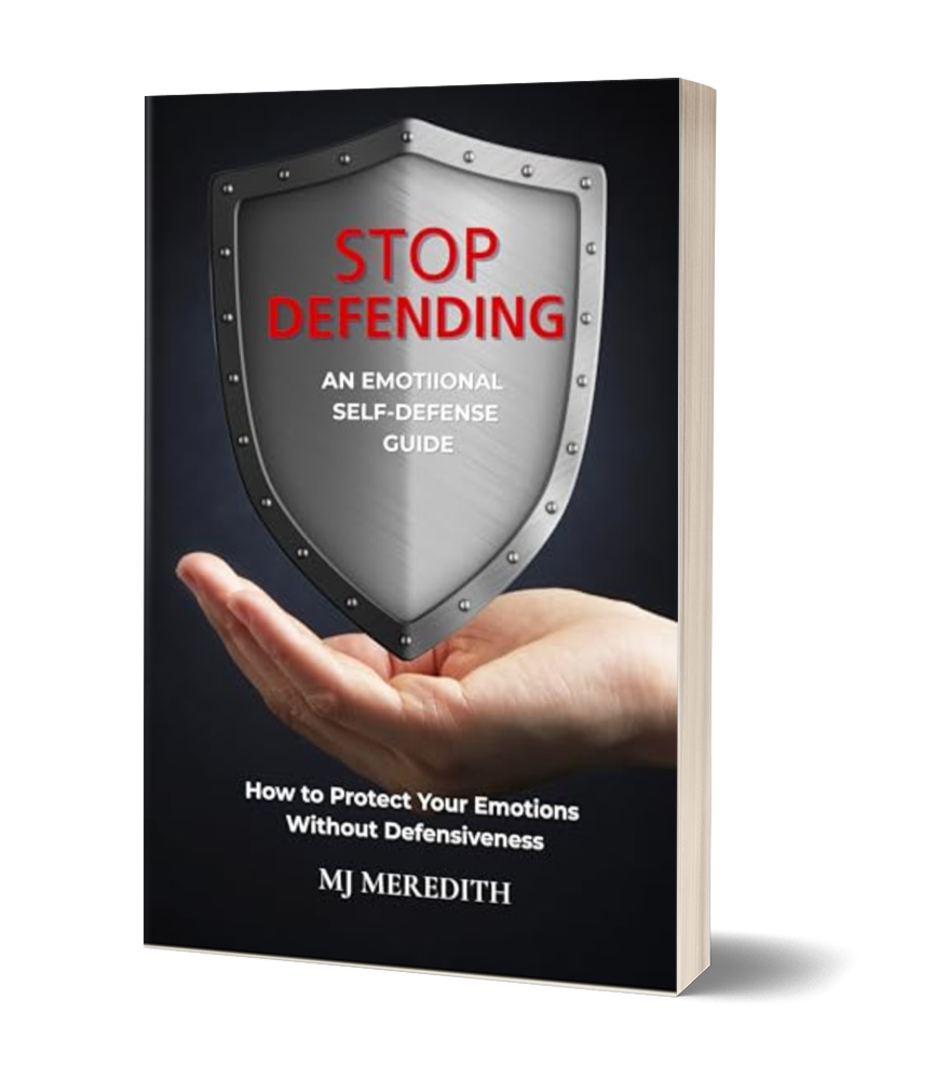
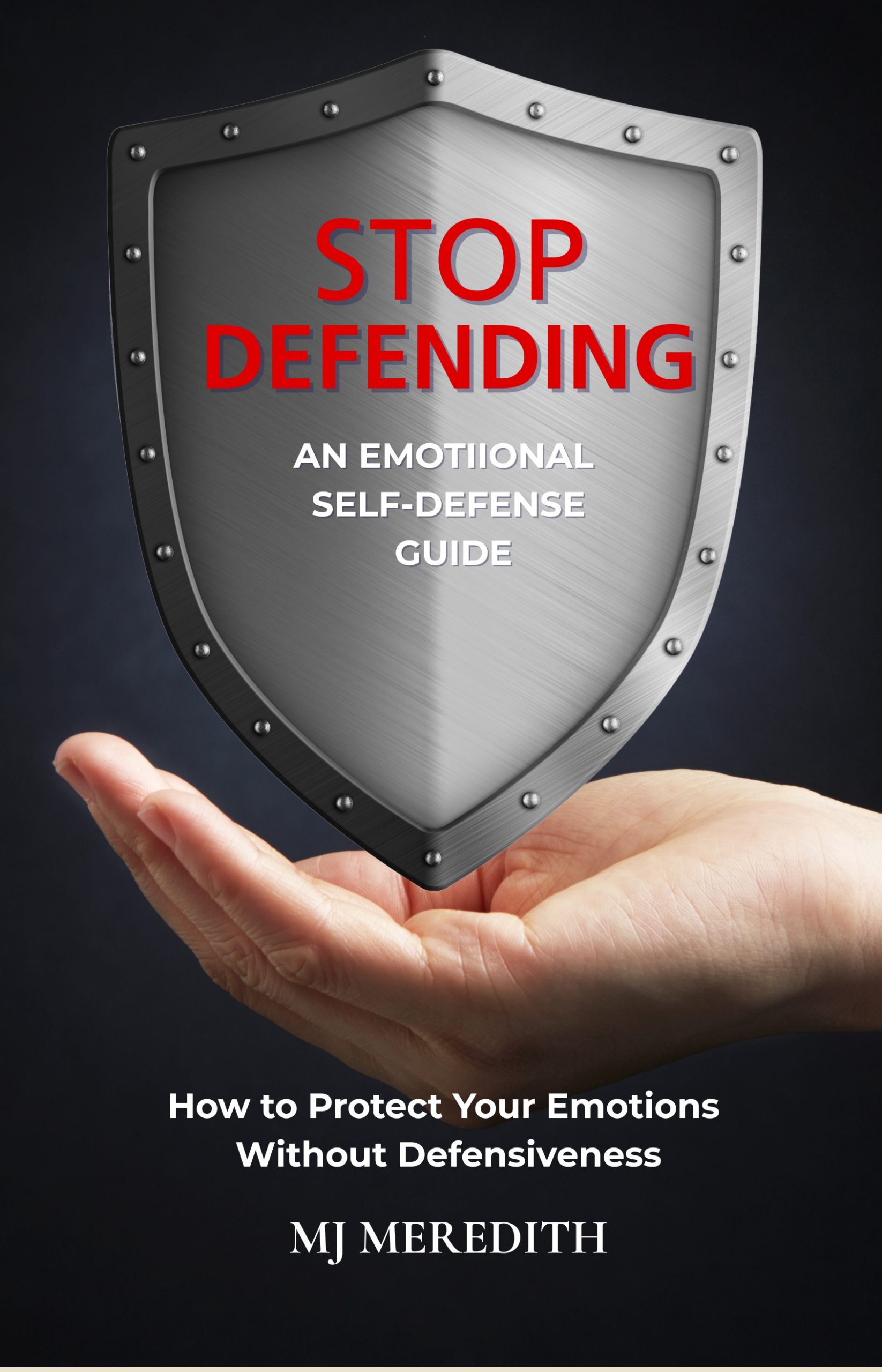
Stop Defending: An Emotional Self-Defense Guide
Not every accusation deserves a defence. Not every disagreement requires an argument. And not everyone is entitled to an explanation.
Have you ever walked away from a conversation feeling exhausted, frustrated or wondering why you spent so much time trying to justify yourself?
Perhaps you’ve found yourself explaining a perfectly reasonable decision over and over again. Apologising for things that weren’t your responsibility. Defending your intentions to someone who seems determined to misunderstand them.
Or perhaps you’ve realised that, somewhere along the way, keeping the peace has become more important than protecting your own peace.
What if you didn’t have to keep defending yourself?
Stop Defending: An Emotional Self-Defense Guide by Australian author MJ Meredith explores the patterns that can draw us into exhausting conversations, unnecessary conflict and the constant pressure to explain, justify or prove ourselves.
It’s an invitation to rethink how you respond to difficult people, challenging conversations and situations that leave you feeling emotionally drained.
Why Do We Feel Compelled to Defend Ourselves?
For many people, defending themselves becomes an automatic response.
Someone questions your decision, and you explain.
They challenge your explanation, and you explain again.
They disagree with your reasoning, and suddenly you’re caught in a conversation that seems to have no end.
But what if the problem isn’t that you haven’t explained yourself clearly enough?
What if the conversation itself is keeping you trapped in a cycle of justification?
Stop Defending encourages readers to recognise these patterns and consider whether every challenge genuinely requires a response.
Because understanding the difference between healthy communication and endless self-defence can change how you approach difficult interactions.
Emotional Self-Defence Begins With Awareness
Emotional self-defence isn’t about attacking others, shutting down communication or refusing to take responsibility.
It’s about recognising when a conversation is constructive, when a boundary is needed and when continuing to engage may no longer serve a useful purpose.
Through accessible discussion and practical reflection, Stop Defending explores themes including:
- The cycle of overexplaining: Recognising when you’re repeatedly justifying choices that don’t require approval.
- Healthy personal boundaries: Understanding where your responsibilities end and another person’s expectations begin.
- Emotional manipulation: Becoming more aware of communication patterns that can create pressure, guilt or confusion.
- Responding rather than reacting: Creating space between an emotional trigger and your next decision.
- Conflict and communication: Recognising the difference between productive disagreement and conversations that go nowhere.
- Personal responsibility: Learning to acknowledge your own actions without automatically accepting responsibility for everyone else’s feelings or behaviour.
- Knowing when to disengage: Understanding that stepping away from an unproductive conversation can be a deliberate choice.
The goal isn’t to win every argument.
It’s to stop treating every disagreement as a battle you must fight.
Boundaries Are Not the Same as Rejection
Saying no doesn’t automatically make you selfish.
Disagreeing doesn’t mean you’re being unreasonable.
And choosing not to continue an exhausting conversation doesn’t mean you’ve lost.
Healthy boundaries allow us to recognise our own needs while still respecting the rights and perspectives of others.
Stop Defending encourages readers to consider how they communicate those boundaries, how they respond when boundaries are challenged and why they may feel uncomfortable putting their own needs into words.
It’s about developing a more thoughtful relationship with conflict, communication and the expectations we place on ourselves.
You Can Be Accountable Without Being Constantly Defensive
There is an important difference between taking responsibility for your actions and feeling responsible for everyone else’s reactions.
Being willing to listen, apologise when appropriate and consider another perspective are valuable parts of healthy communication.
But accountability doesn’t require endless self-justification.
Sometimes a clear explanation is enough.
Sometimes a respectful disagreement is enough.
And sometimes the most constructive response is to recognise that a conversation has reached its natural conclusion.
You can be open to feedback without surrendering your right to make your own decisions.
Who Is This Book For?
Stop Defending is for anyone who:
- Frequently feels pressured to explain or justify their choices.
- Struggles to establish or maintain personal boundaries.
- Finds difficult conversations emotionally exhausting.
- Wants to recognise unhealthy communication patterns.
- Feels responsible for keeping everyone else happy.
- Wants to approach disagreement with greater awareness and confidence.
- Is exploring personal growth, self-reflection and more intentional communication.
Whether these experiences arise in personal relationships, family situations, friendships or professional life, the book offers an opportunity to reconsider familiar patterns and explore different ways of responding.
About the Author
MJ Meredith is an Australian author, artisan and workshop facilitator based in the Hunter Valley, New South Wales.
Her writing explores mindfulness, self-awareness, personal growth and the ways people can develop a more intentional relationship with their thoughts, choices and everyday experiences.
Through her books and educational work, MJ encourages readers to question familiar assumptions, reflect on their experiences and explore what it means to make choices with greater awareness.
Stop Defending: An Emotional Self-Defense Guide extends these themes into the world of personal boundaries, communication and emotional self-defence.
Stop Explaining. Start Understanding. Choose Your Response.
You don’t have to agree with everyone.
You don’t have to answer every challenge.
And you don’t have to spend your life trying to convince other people that your choices are reasonable.
Sometimes the most meaningful change begins when you recognise that you have a choice about how, when and whether you engage.
Not every argument needs to be won. Some simply don’t need to be continued.
Discover a different approach to boundaries, communication and emotional self-defence with Stop Defending: An Emotional Self-Defense Guide.
Available formats and publication details to be confirmed.